Walls Built to Hold Slope and Stop Erosion
Retaining Wall Construction in Annapolis for properties losing soil to runoff or needing terraced yard access
Annapolis properties with sloping terrain face steady soil migration during heavy rain, leaving exposed tree roots, uneven turf, and diminished usable yard space. AXC Landscaping Services installs retaining walls that stabilize hillsides through engineered support and integrated drainage channels that redirect water away from vulnerable foundation zones. You see the difference in graded tiers that stay level season after season and planting beds that no longer wash into lower sections of your lot.
Retaining wall construction addresses erosion by creating a physical barrier that holds back soil while allowing water to pass through or around the structure rather than carrying sediment downslope. The choice between segmental block systems and natural stone depends on the height of the wall, the load it must bear, and whether drainage integration requires geogrid reinforcement or gravel backfill to prevent hydrostatic pressure buildup.
Schedule a site evaluation to determine wall height requirements and drainage routing for your slope conditions.
What Proper Wall Installation Requires
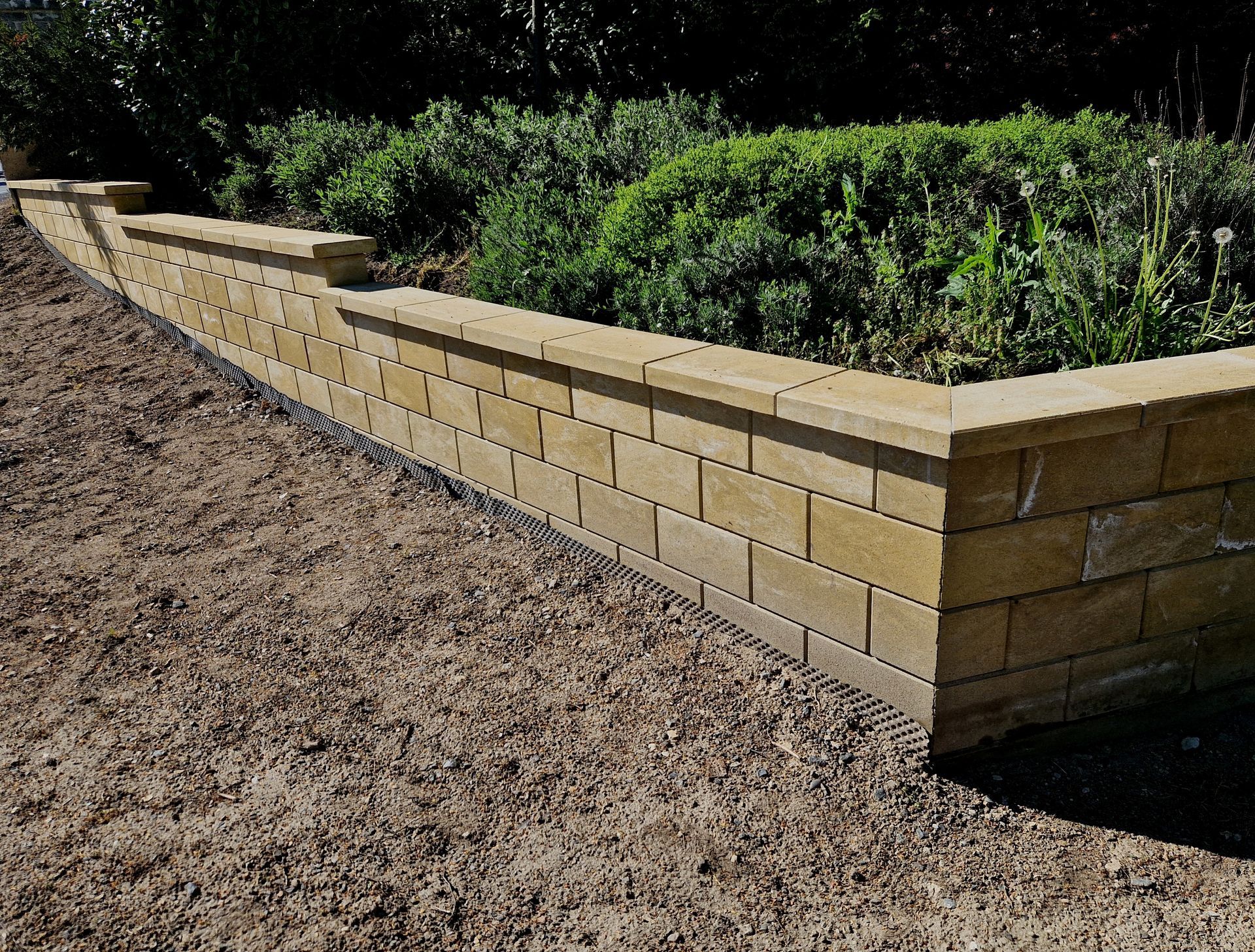
Retaining wall systems rely on compacted aggregate base layers that extend below the frost line and a backfill zone packed in lifts to eliminate voids that would allow settling. Drainage integration solutions include perforated pipe installed at the base of the wall and weep holes that prevent water from pooling behind the structure, which would create outward pressure and eventual failure.
After installation, you notice that previously eroding slopes hold firm through rainstorms, terraced sections provide usable planting or lawn areas where only steep grades existed before, and water exits the wall system through designated drainage points rather than undermining the soil. Tiered landscape wall systems create multiple levels for planting beds or walking paths while distributing soil load across several shorter walls instead of one tall structure.
Block and stone wall options differ in weight, interlock method, and aesthetic finish, with segmental concrete blocks offering consistent dimensions for faster installation and natural stone requiring more labor for fitting but delivering irregular texture. Hillside stabilization services may include regrading adjacent areas to reduce the load on the wall or installing plantings with root systems that anchor remaining soil.
Questions Before Starting Your Project
Retaining walls serve both functional and decorative purposes, and understanding the construction process helps property owners in Annapolis make informed decisions about materials and design.
What determines whether a retaining wall needs drainage integration?
Any wall over two feet tall or built in clay-heavy soil requires drainage solutions because water accumulation behind the wall creates hydrostatic pressure that pushes the structure outward, leading to bulging or collapse.
How does tiered wall construction differ from a single tall wall?
Tiered systems distribute soil load across multiple shorter walls spaced along the slope, reducing the pressure on any one structure and often eliminating the need for engineered reinforcement required in walls exceeding four feet in height.
What preparation work happens before wall installation begins?
The site is excavated to stable subgrade, a compacted aggregate base is installed to provide a level footing that extends below frost depth, and the area behind the wall is cleared of organic material that would decompose and create voids.
When is natural stone preferred over segmental block?
Stone walls suit properties where irregular texture complements existing landscape features or historic architecture, though installation requires more time for fitting and may cost more per linear foot than modular block systems.
What maintenance do retaining walls require after installation?
You inspect drainage outlets annually to confirm water exits freely, check for any settling or movement in the wall face, and remove vegetation growing in joints that could displace stones or blocks over time.
AXC Landscaping Services handles retaining wall construction with attention to base preparation and drainage routing that prevent the erosion and structural failures common in walls built without proper backfill compaction. Request an on-site consultation to review slope conditions and material options suited to your property layout.