
Ground Cover That Controls Weeds and Holds Moisture
Mulch & Decorative Rock Installation in Annapolis for planting beds that need weed suppression and consistent soil temperature
Bare soil in planting beds dries out quickly, allows weed seeds to germinate in direct sunlight, and erodes during rain as water carries loose particles onto hardscape or lawn areas. Decorative mulch and rock landscaping solutions from AXC Landscaping Services provide a barrier layer that shades the soil surface, reduces evaporation, and prevents light from reaching dormant weed seeds. You notice fewer weeds emerging between plants, soil that stays moist longer between waterings, and beds that maintain a defined edge rather than washing away.
Mulch spreading services involve applying organic material like shredded hardwood or pine bark in a layer thick enough to block sunlight but not so deep that it holds excess moisture against plant stems. River rock bed installation uses stone in sizes ranging from small pebbles to larger cobbles, with fabric underlayment often installed first to separate the rock from soil and further inhibit weed growth while allowing water to penetrate.
Request a detailed estimate based on the total square footage of your planting beds and your preference for organic mulch versus stone.
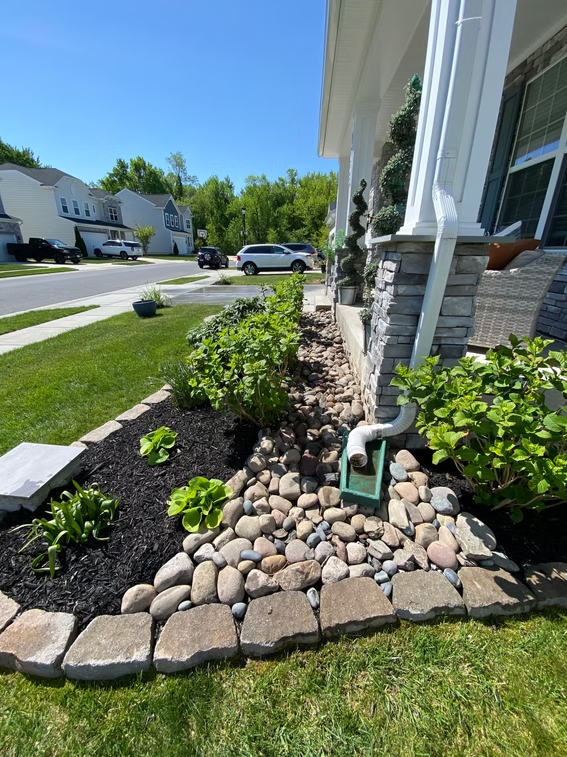
What Changes After Ground Cover Installation
Low-maintenance landscape upgrades focus on reducing the time spent pulling weeds, watering, and redefining bed edges that blur into surrounding turf. Decorative stone borders create a physical transition between mulched planting areas and lawn, preventing grass from creeping into beds and giving mowing equipment a clear stopping point. Flower bed enhancement through ground cover also moderates soil temperature swings, keeping roots cooler in summer heat and insulating them during winter freezes common in the Annapolis area.
After installation, planting beds look uniform and intentional rather than patchy, weeds appear far less frequently because seeds can't access the light needed for germination, and you spend less time watering because the mulch or rock layer slows evaporation from the soil surface. Organic mulches decompose over time and require replenishment every one to two years, while decorative rock remains in place indefinitely but may need occasional cleaning to remove leaf debris or silt.
Weed prevention solutions work best when combined with proper bed preparation that removes existing weed roots and applies edging to contain the mulch or rock. Some property owners prefer organic mulch for vegetable or annual beds where soil enrichment from decomposition is beneficial, and stone for perennial beds where long-term stability and minimal maintenance are priorities.
Answers to Frequent Service Questions
Ground cover installation may seem straightforward, but material selection and application depth significantly affect both appearance and weed control performance.
What depth of mulch provides effective weed suppression?
A layer of two to three inches blocks sunlight from reaching weed seeds while allowing water to penetrate to plant roots, with depths exceeding four inches potentially holding too much moisture against stems and encouraging rot.
How does river rock differ from organic mulch in maintenance requirements?
Rock stays in place without decomposing and doesn't need annual replenishment, but it doesn't enrich the soil and can be more difficult to remove if you redesign planting beds later.
When should fabric underlayment be installed beneath ground cover?
Fabric barriers work well under decorative stone to prevent rocks from sinking into soil and to add another layer of weed blockage, though they're less commonly used under organic mulch because decomposition benefits soil health.
What types of stone are best for planting bed applications in Annapolis?
River rock in one- to two-inch sizes provides good coverage without overwhelming smaller plants, while larger decorative stone works better in expansive beds where bold texture is desired and foot traffic is minimal.
How often does mulch need replacement to maintain appearance and effectiveness?
Organic mulches break down and lose color over twelve to eighteen months, requiring fresh material to restore the weed-blocking depth and visual uniformity that make beds look maintained.
AXC Landscaping Services installs mulch and decorative rock with attention to proper depth and edge definition that keep planting beds looking clean while reducing the labor you spend on weeding and watering. Schedule a property evaluation to identify which bed areas would benefit most from ground cover upgrades and to review material options suited to your landscape style.